

Ample + rooted
Foundations of C.A.R.E:
A Liberatory Approach to Eating Disorder Healing
.png)
75 CEs | NBCC Approved (RD CPEUs pending) | We Start March 25th!
.png)
Where clinical training meets belonging, embodiment, and brave, joyful resistance.
You’ve taken the CEUs. You’ve studied the protocols. But something still feels off.
You want to support clients with eating disorders in a way that aligns with your values.
You’re craving a training that is as relational as it is clinically robust.
You want tools that actually work and a framework that doesn’t compromise your integrity.
You’re not alone.
We’ve trained hundreds of clinicians across disciplines using our signature C.A.R.E.™ Framework- an approach shaped by unlearning, reclamation, and a deep belief in relationship as the site of healing.
Our training is designed to feel like a breath, not a burden.
A return, not just to the work, but to yourself.
This is Foundations of C.A.R.E.™
A clinical training for providers ready to unlearn harm and offer healing that liberates.
More than just a course or a model, this is a movement and a call to practice differently.
Grounded in relational neuroscience and collective liberation, this training teaches you how to support clients with eating disorders without replicating the systems that caused the harm.
You’ll learn our original C.A.R.E.™ framework, Collective Attunement + Radical Embodiment, a clinical orientation designed to help you show up with clarity, confidence, and connection.
But more than that?
You’ll be held in a learning space that feels like community, not a classroom. Together, we move at a pace that honors the nervous system, not the grind. You’ll reflect deeply, practice bravely, and unlearn with others who are also reclaiming their clinical voice. This is where clinical skill meets ethical clarity, where embodied presence fuels advocacy, and where relational courage is nurtured through collective wisdom. In connection, the learning sinks in deeper and the work becomes more possible, more sustainable, and more true.
Meet the C.A.R.E.™ Framework
C.A.R.E.™ = Collective Attunement + Radical Embodiment
Created by Ample + Rooted, the C.A.R.E.™ Framework is our justice-rooted, trauma-responsive model for inclusive and anti-oppressive eating disorder healing.
A liberatory roadmap and clinical foundation, it helps you:
- Treat eating disorders without replicating control, shame, or erasure
- Support diverse bodies and identities with clarity, context, and compassion
- Build sustainable, liberatory practices for long-haul healing work
What C.A.R.E.™ Stands For
C- Collective
Eating disorders do not happen in isolation. Neither should healing. Explore the sociopolitical roots of body shame, hunger, and harm.
→ Treat clients in context - not in a vacuum
→ Unlearn surveillance-based care
→ Name what traditional models erase
A- Attunement
Attunement is the muscle of liberation and a practice of embodied presence.
→ Conduct affirming, trauma-responsive assessments
→ Practice relational ethics, not extractive neutrality
→ Stay regulated through rupture + repair
R- Radical
“Radical” means rooted; in justice, truth, and the body’s inherent worth.
→ Work with shame, trauma, and dissociation without coercion
→ Support body image, pleasure, and autonomy
→ Navigate medical and cultural harm with skill and care
E- Embodiment
Embodiment is both a return and a resistance.
→ Hold diagnostic complexity and co-occurrence
→ Integrate somatic, narrative, group, and psychedelic-informed tools
→ Resource yourself and your clients to stay in relationship with what’s hard
What the C.A.R.E.™ Framework Does
✔ Disrupts harm within traditional eating disorder treatment models
✔ A roadmap for eating disorder care that is relational, liberatory, and clinically sound
✔ Tools to name and interrupt harm both inside and outside the treatment room
✔ Practice rooted in liberation not perfectionism, pathology, or fear
✔ A return to yourself as a clinician, human, and body among bodies
%20(2).png)


what to expect
Join the Spring 2026 Cohort of Foundations of C.A.R.E.™
- Join a cohort and alumni community with the shared purpose of body liberation for all where you will deepen your understanding and increase your skills in working with eating disorders and body shame.
Live Cohorts (Bi-Weekly on Wednesdays)
8 live consultation calls begin March 25th and spots are limited.
Registration closes March 15th (or sooner if full).
Choose the group that fits your schedule:
- Cohort 15: 10:30am–12:00pm CST
- Cohort 16: 3:00pm–4:30pm CST
Live calls are hosted via Zoom and include breakout learning pods for deeper conversation and connection. Optional affinity groups are available for BIPoC, LGBTQ+, neurodivergent, and fat providers.
How You’ll Learn
- Self-paced modules
- Connection + community through our private platform, The Gathering Space (think Facebook + Slack, but without the noise)
- Robust workbooks filled with case studies, prompts, and podcast-style resources
- Eight 90-minute live consultation calls, every other week with your cohort
CEs + Investment
- 75 NBCC-approved CEs available
- CPEUs for dietitians pending
- Investment:
- $2,250 pay in full
- or $375/month for 6 months
- Equity pricing available; details in the application
Ample and Rooted School has been approved by NBCC as an Approved Continuing Education Provider, ACEP No. 7608. Programs that do not qualify for NBCC credit are clearly identified. Ample and Rooted School is solely responsible for all aspects of the programs.
.jpg)
What’s Included Beyond the Training
When you enroll, you’ll also receive:
Clinical Demo Vault
Watch the C.A.R.E.™ Framework come alive through real sessions, skillfully modeled for direct integration.
Office Hours
Live, facilitated time for clinical reflection, case questions, and staying rooted in the work.
C.A.R.E.™ Tools + Handouts
Downloadable clinical supports to deepen integration and bring clarity to complexity.
Guest Experts + Fireside Chats
Intimate conversations and trainings with leaders in liberation-focused care, embodiment, and systemic healing.
Embodiment Practices
Meditations and sensory tools to ground the nervous system of the practitioner.
After You Graduate
You'll walk away with:
✔ A Certificate in the C.A.R.E.™ Framework
✔ A digital badge and designation as an Ample + Rooted C.A.R.E. Provider to showcase your values-aligned clinical training and sets you apart in a crowded field
✔ Lifelong access to our Ample + Rooted C.A.R.E. Provider Alumni Community for ongoing consultation, training, connection, and care
Your guides
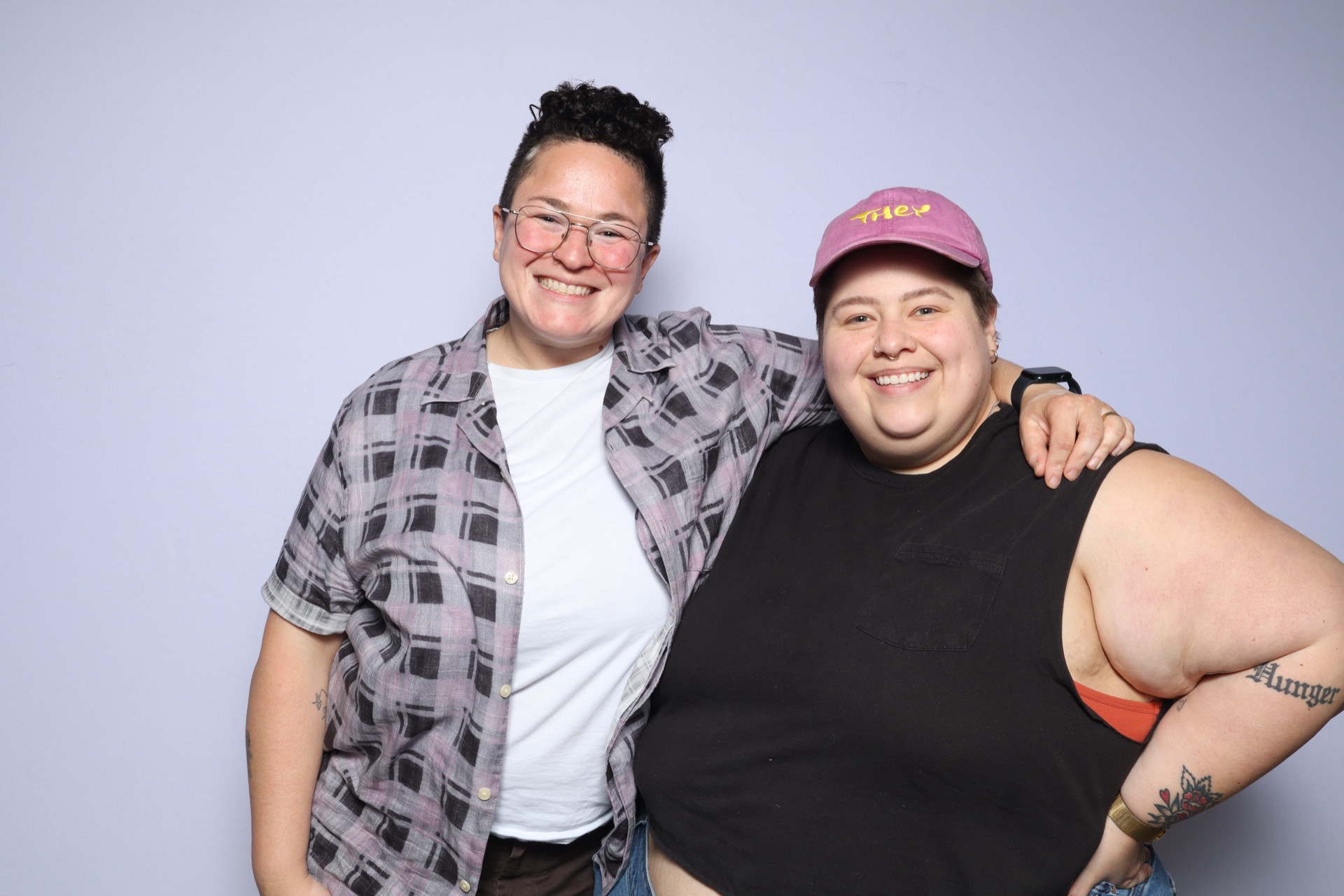
This training is co-led by Neathery Falchuk (they/them), founder of Ample + Rooted and creator of the C.A.R.E.™ Framework, and Al Clifton (they/them), our Programs Director. Together, they bring decades of clinical experience, a mountain of heart, and a teaching style that’s deeply relational, refreshingly real, and consistently named by alumni as one of the most transformative parts of the program. This training is taught by people who live what they teach and who know what it means to build care in bodies that systems try to erase.
You won’t find performative neutrality or dry slideshows here. What you will find is:
- Teaching that feels like being with, not talked at
- Clinical wisdom shared with ease, humor, and groundedness
- A space where you can bring your whole self: the practitioner and the person
- Learning that feels like being known
- A place where hard things are easier to hold
You’ll learn skills, yes. But more than that, you’ll remember who you are in this work and why you started in the first place.
Curriculum overview
PILLAR 1: Collective
Understanding the Roots of Disordered Eating
Eating disorders do not arise in isolation; they emerge from and are shaped by intersecting systems of harm. This pillar contextualizes EDs within systemic, historical, and structural frameworks, preparing clinicians to treat the individual without separating them from their world.
Module 1: What Even Is Disordered Eating?
> Reframing EDs beyond pathology: sociocultural etiology, symptom meaning, and diagnostic limitations
> EDs through the lifespan
> Exploring medical consequences, complications, and systemic disparities in access
> Common co-occurring conditions (MCAS, POTS, EDS, diabetes, PCOS) and their impact on nourishment, symptoms, and care planning
> Understanding the role of pharmacotherapy in ED treatment—when it helps, when it harms, and how to engage in collaborative, consent-centered conversations with prescribers
> Developing a liberatory lens for how we name, assess, and respond to eating concerns
Module 2: Bodies, Oppression, and Systemic Harm
> Intersectionality, structural violence, and the cultural containers of EDs
> Racism, ableism, anti-fatness, and the myth of “objective care”
> Recognizing clinician bias and structural complicity
> Naming the role of capitalism and surveillance culture in disembodiment
Module 3: The Politics of Hunger
> Fat liberation, capitalism, colonization, food insecurity and food access
> GLP-1 medications, bariatric surgery, medical gatekeeping, and the co-opting of “health”
> The ethical tension between bodily autonomy and harm reduction
> Navigating conversations when food “freedom” is or has been a privilege
Module 4: Digital Bodies and Algorithmic Harm
> How surveillance, AI filters, and digital culture shape body image and distress
> Social media overwhelm, algorithmic bias, and body surveillance
> Media literacy as a clinical and cultural intervention
Module 5: Belonging, Displacement + Body Story
> Collective grief, shame, and the body’s search for safety
> Cultural storytelling, ancestral rupture, and healing as reclamation
> When access to care brings both rescue and rupture and naming the harm of treatment itself
> Critique how many eating disorder treatments replicate social control—through rigid rules, forced weigh-ins, surveillance, and power-over dynamics
> How the pandemic amplified isolation, food insecurity, and body surveillance
> Economic and political stress as drivers of control-based coping and ED risk.
> Climate crisis as a chronic threat impacting safety, food systems, and embodiment.
PILLAR 2: Attunement
Foundations of Relational, Ethical Practice
Attunement is both a skill and an ethic. This pillar trains clinicians in trauma-informed, inclusive assessment and communication, emphasizing clarity, consent, presence, and practitioner self-awareness.
Module 6: Seeing Clearly, Listening Deeply
> Inclusive, trauma-responsive, and neurodivergence-affirming assessments
> Identifying red/pink flags, protective strategies, and symptom nuance
> Using intake as a relational, not extractive, process
> Harm reduction as clinical orientation
Module 7: Ethical Collaboration in Fragmented Systems
> Collaborating across roles, values, and power imbalances
> How to team ethically and effectively in a fractured care system
> Relational repair in consultation and care coordination
Module 8: Nourishment and the Nervous System
> Understanding food and feeding through a trauma-informed lens
> Intro to nutrition science, food insecurity, and sensory needs
> Supporting nourishment while honoring autonomy and cultural relevance
> Redefining nutrition ethics in a field still steeped in weight stigma
Module 9: Language That Liberates
> Clinical documentation, reclaiming pathologized terms, and how language lands
> Navigating chart notes and interprofessional communication with clarity
> Shifting from compliance to compassion in how we speak, write, and record
Module 10: Embodied Presence
> Countertransference, co-regulation, and nervous system attunement
> Tracing your own body story, what you’ve lived, learned, and inherited, to deepen presence, compassion, and clinical clarity
> Resourcing ourselves to remain in complexity, rupture, and repair
Module 11: Restoring Relational Wisdom
> Unlearning clinical hierarchy, saviorism, and over-identification with credentials
> Making room for collective knowledge and intergenerational insight
> Valuing lived/living experience and community-based expertise alongside formal training
> Deepening clinical intuition through embodied attunement
> Reframing “clinical expertise” as relational trust and situated knowledge
PILLAR 3: Radical
Interventions That Reclaim, Resist + Repair
Healing is political. This pillar offers direct intervention skills rooted in justice, dignity, and body sovereignty designed for real-world use across therapeutic orientations.
Module 12: Embodied Belonging
> Body image interventions that center grief, identity, and belonging
> Shifting from body projects to body presence
> Understand body shame as a trauma-informed survival strategy and meet it with nuance, not urgency
> Guide clients from knowing body liberation to living it, through somatic and relational interventions
> Address body image grief and identity with care that’s culturally rooted and clinically sound
> Navigating weight loss conversations, medical pressure, and body autonomy with relational ethics
> Helping clients return to the body as a site of belonging rather than control
Module 13: Pleasure as Protest, Play as Medicine
> Erotic resourcing, joy work, and redefining pleasure as regulation
> Integrating grief, rage, play, and possibility
> Building capacity for delight alongside grief
> Embodied resilience and dreaming our futures through creative and relational practices
Module 14: Trauma, Dissociation + Sensory Survival
> Polyvagal theory, shutdown states, and the neurobiology of safety
> Dissociation as protection, not pathology
> Building sensory bridges back to self
> Working with high-risk behaviors without coercion
> Creating co-authored safety and resourcing plans
> Addressing self-harm, suicidality, or medical instability with dignity
Module 15: Relational Embodiment + Erotic Narratives
> Navigating EDs and body shame within erotic, romantic, and platonic relationships
> Body narratives in intimacy, desire, and attachment
> Honoring queer, trans, disabled, fat, and asexual/aromantic embodiment
> Exploring kink, BDSM, and power dynamics as part of clients’ embodied narratives of agency, trust, and repair
Module 16: Attachment + Relational Repair in ED Work
> Rupture, co-regulation, and boundary repair
> Interpersonal neurobiology in practice
> Tools for naming, staying, and repairing
> Interventions that restore dignity and resist carceral responses to eating and embodiment
Module 17: Clinical Skills for Attuned Eating Disorder Care
> Narrative, somatic, expressive, and behavioral tools tailored to client identity and access needs
> EMDR, IFS, and psychedelic-informed care as liberatory modalities
> Group therapy as relational healing: structure, process, and emergent moments
> Case demos, practice prompts, and creative adaptations for lived experience
PILLAR 4: Embodiment
Integration, Expansion + Staying With Complexity
This pillar moves us beyond certainty into the lived practice of attuned, long-haul healing. We explore how to sustain ourselves and each other while honoring contradiction, grief, and growth.
Module 18: When It’s More Than the ED
Holding diagnostic complexity with careWorking with co-occurring trauma, OCD, personality disorders, substance use, and SED-EDsTreating EDs when livelihood depends on the body (athletes, military, sex workers, actors, etc)Case examples and decision-making maps
Module 19: Movement, Stillness, and the Body’s Rhythms
> Redefining movement, rest, ritual, and sensory regulation
> Movement reclamation and rest as resistance
> Resourcing clients across pacing and energy levels
> Exploring body grief and the impact of ableism
Module 20: CARE in Action
> Real-world scaffolding for tough moments
> Clinical integration, case vignettes, and supervision tools
> Liberation centered treatment planning
> Identify where fear, risk-aversion, or “liability culture” may be shaping your clinical choices and return to consent-based, relationship-centered care planning
Closing: Long-Term Practice + Community Care
> How we remain in relationship to the work
> Ritual closure, collective care mapping, and resourcing
> The ethics of commitment to ongoing consultation and community
> Embodied learning requires repetition and belonging. Because real learning happens in relationship, not in isolation
Without This Work…
You may keep:
> Burning out from values misalignment
> Struggling to adapt ED care to real-world clients
> Doubting yourself when nuance arises
> Accidentally replicating the very harm you want to heal
Liberatory practice shouldn’t be guesswork.
You deserve clinical tools that match your integrity.
What Becomes Possible
With Foundations of C.A.R.E.™, you’ll walk away with:
> A toolkit that centers trauma, joy, and justice
> Skills to meet grief, identity, and embodiment with care
> Confidence to navigate complex client needs
> A deeper connection to your work and your own body
> Community support that doesn’t end when the training does
This isn’t just a training.
It’s a return to relationship. Where healing begins.

Refund Policy+ Terms of use
Due to the extensive time, energy, and planning for this program, in addition to limited slots available, we are unable to accommodate refunds. When you commit to this program, you are committing to the entire duration of the course and are financially responsible for the program cost regardless of your attendance.
By registering for this program, you are indicating you have read and agreed to our privacy policy and terms of use.
Are you ready to join us?
Ample + RootED Gathering: Free Eating Disorder Training
It's incredibly important to us at Ample + Rooted to provide accessible consultation and training. As a fulfillment of this commitment, we offer a virtual space for those who desire more learning in the field of eating disorders, dieting, body shame, fat liberation and Health at Every Size®.
Learn MoreAmple + RootED Foundations: Online Eating Disorder Training Program
Whether or not you seek to specialize in treating eating disorders, it’s likely you’ve had a client in your office struggling with food, exercise and/or body shame. Eating disorders are prevalent in our society and are a highly fatal mental health diagnosis, second to opioid use disorder. Astonishingly, comprehensive and accurate training and education are minimal.
Learn MoreAmple + RootED Community: Eating Disorder Training
The Ample + RootED Community is an engaging, supportive community of mental health professionals with the shared purpose of body liberation for all and who desire ongoing training, education, and connection. This is a space to deepen understanding and increase your skills in working with eating disorders and body shame.
Learn MoreExecutive Consultation, Training and Workshops
Neathery Falchuk, LCSW-S, CGP, serves as a consultant for non-profit organizations, agencies and corporations and our team is available to conduct workshops and trainings to staff and executives on a wide-ranging list of topics.
Learn More